

Shepherding newts to safety
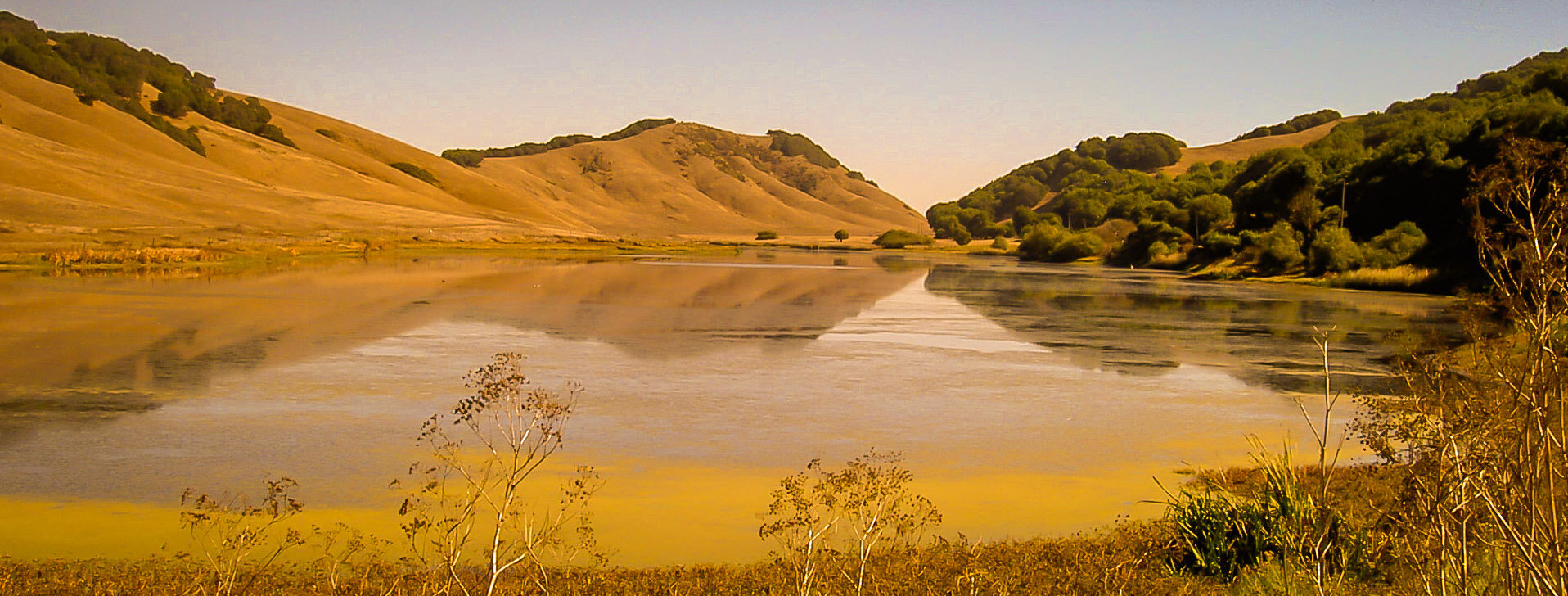
Each winter, newts cross Chileno Valley Road to reach their breeding grounds in Laguna Lake. Our volunteers patrol after dark, moving newts, frogs, and other amphibians safely across the road and carefully recording what they find.
Since 2019, our volunteers have documented 39,066 newt rescues
(through the 2025–26 season).
We’re also working toward a permanent, science-based crossing solution—so these animals can make their migrations safely without a helping hand.
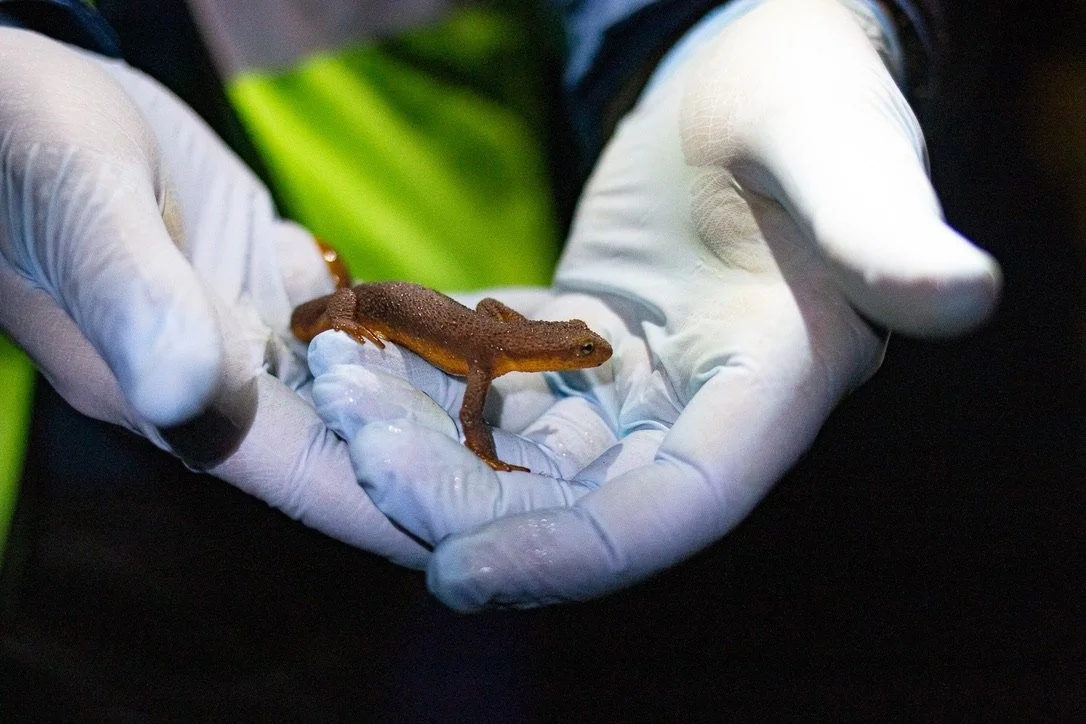
Can the Newts Count on You?
Help us protect these animals on their remarkable
journeys—and work towards a safer crossing.
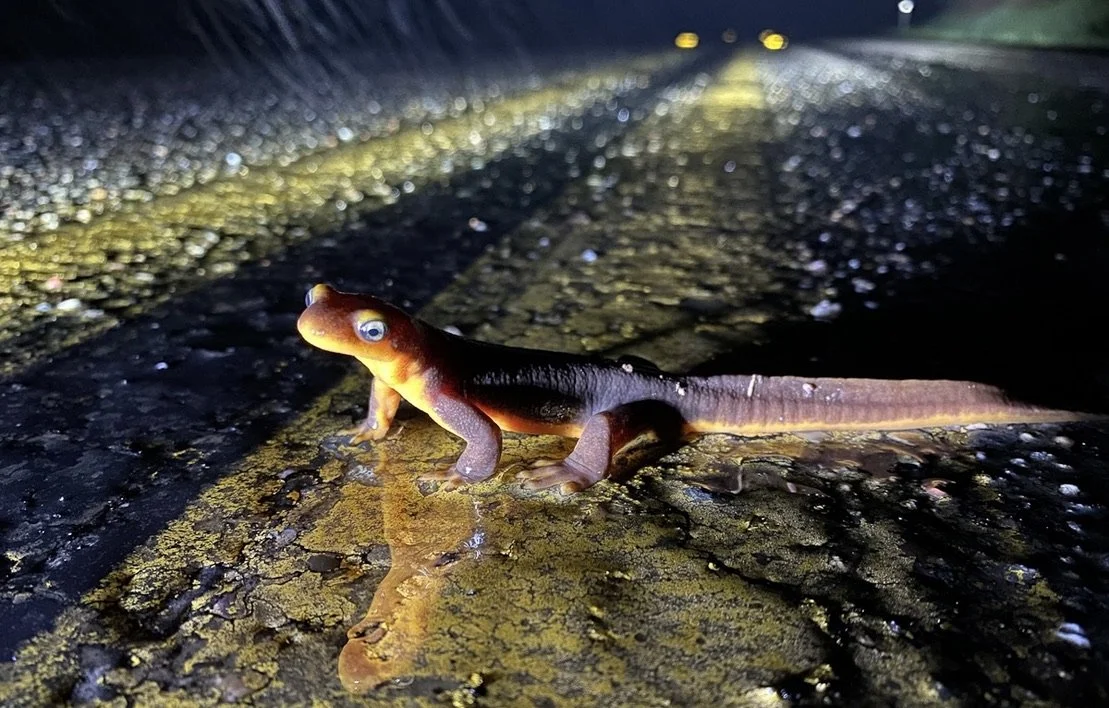
Every Crossing Counts
2026–2027 Season Patrol Results
TEST DATA — Layout preview only.
All counts and timestamps below are samples, not live patrol results.
| Species | Alive | Dead |
|---|---|---|
| NewtsT. torosa / T. granulosa | 13 | 4 |
| California Red-legged FrogR. draytonii | 6 | 1 |
Meet Laguna Lake, the Chileno Valley Newt Brigade, and the animals we protect.
Introducing the Critters — Small animals. Remarkable journeys.
Newts are salamanders with lives that connect land and water. The California Newt and Rough-skinned Newt shelter in damp woodland hideaways, hunt worms, insects, and other small creatures, and breed in ponds, lakes, and streams. Fall and winter rains bring them out—and bring many onto the roads that cross their habitat. Both have bright yellow-to-orange undersides, a warning to predators of their poisonous skin.
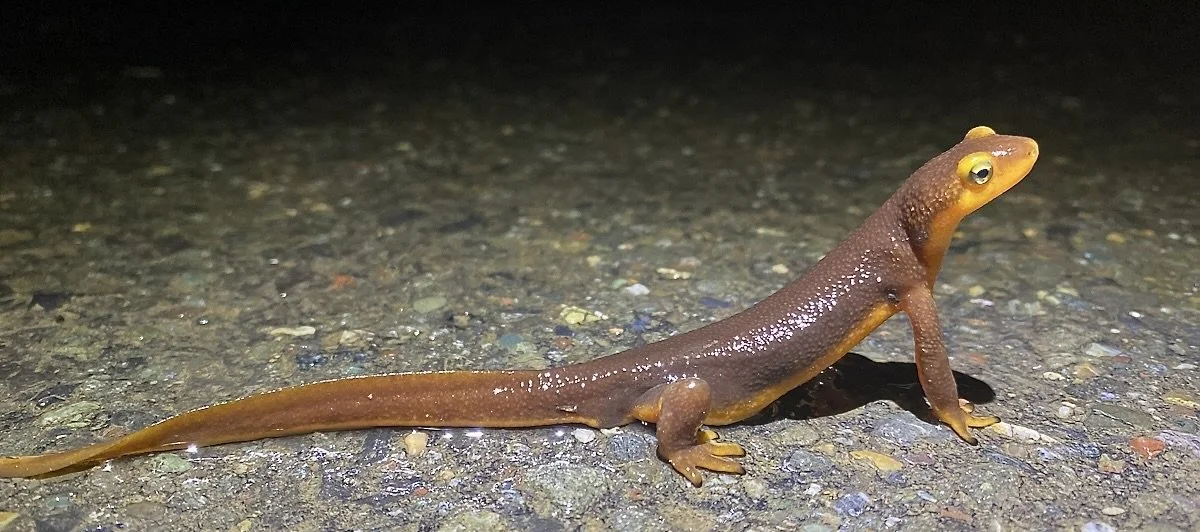
California Newt (Taricha torosa)
Found nowhere else in the wild, the California Newt holds a special place in many a childhood spent turning over rocks and logs. It has a brown back, a yellow-to-orange belly, and prominent, pale-rimmed eyes. Season after season, adults return to the waters where they hatched, sometimes journeying as far as three miles—a remarkable sense of home for a small animal navigating a changing landscape.
Come breeding season, male California Newts undergo a remarkable makeover: their skin becomes smoother and their tails flatten into broad paddles for swimming (see photo above). Their dining technique changes, too. On land, they catch prey with a sticky tongue; underwater, they draw food into their mouths by suction. This small woodland wanderer is equally at home hunting beneath the water’s surface.
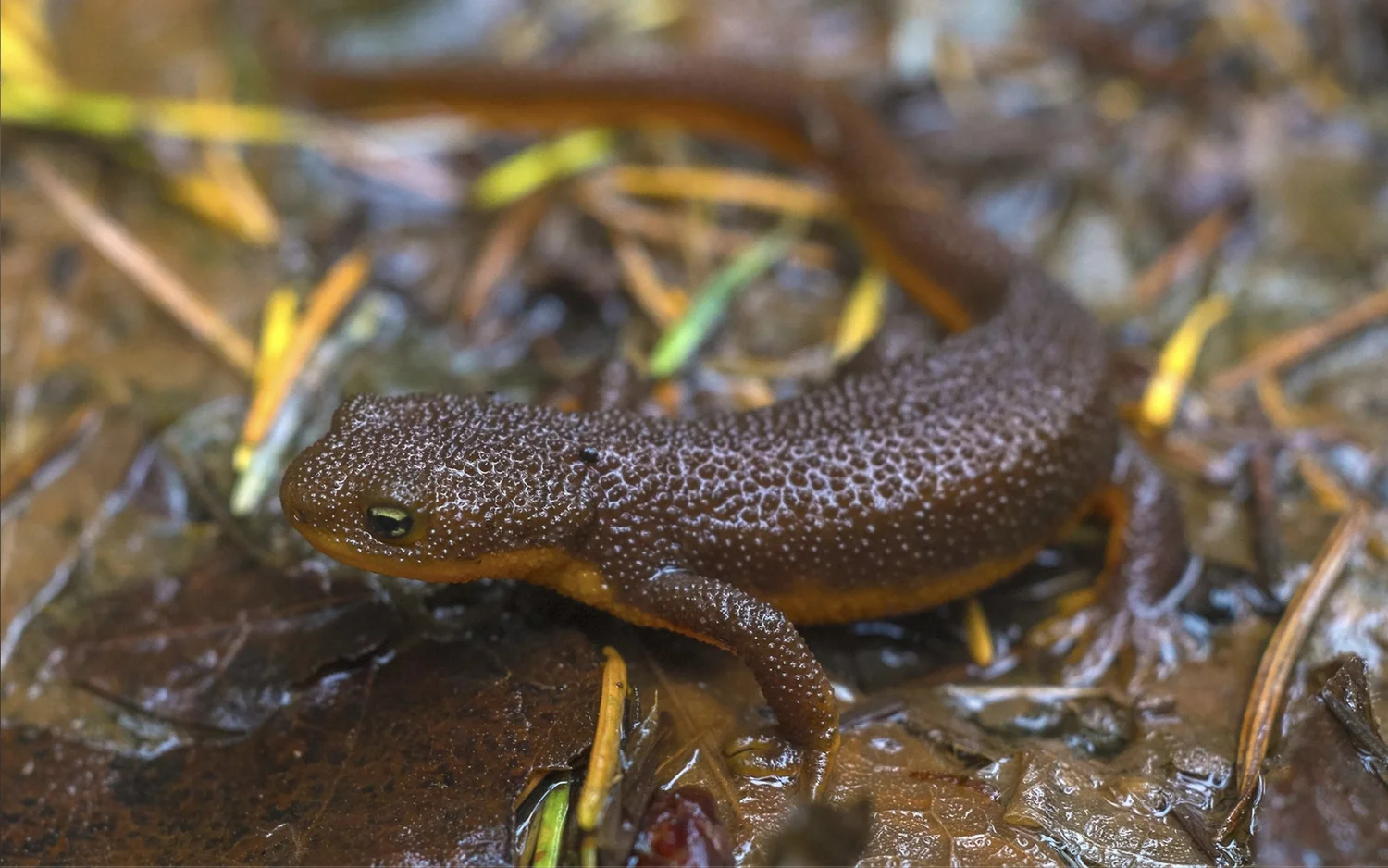
Rough-skinned Newt (Taricha granulosa)
The Rough-skinned Newt (Taricha granulosa) is the California Newt’s close cousin and another traveler on Chileno Valley Road. Both have brown backs and colorful bellies, but a closer look reveals a useful difference: Rough-skinned Newts have smaller eyes and dark lower eyelids, while California Newts have more prominent eyes with lighter coloring beneath them. Despite its name, rough skin alone won’t distinguish this species— both newts have grainy skin while living on land.
When threatened, a Rough-skinned Newt may arch its back and curl its tail over its body, displaying its bright underside as a warning to predators. The California Newt makes a similar display but usually keeps its tail straight. Rough-skinned Newts also have surprisingly flexible routines: while many move between woodland shelters and breeding waters, some populations spend much of the year in water.
“Newts are an aquatic indicator species. The health of the population can indicate the health of other aquatic species and, more broadly, the health of a watershed.”
— Gail Seymour, retired Sr. Environmental Scientist, CA Dept. Fish and Wildlife
Sign up to receive our NewtNews newsletter
Another Rough-skinned Newt saved from likely vehicular slaughter on Chileno Valley Road
“Each time we rescue slippery, spotted beings we attest to their right to be, to live in the sovereign territory of their own lives. Carrying salamanders to safety also helps us to remember the covenant of reciprocity, the mutual responsibility that we have for each other.”