
Shepherding newts to safety
Photo credit: Connor Long
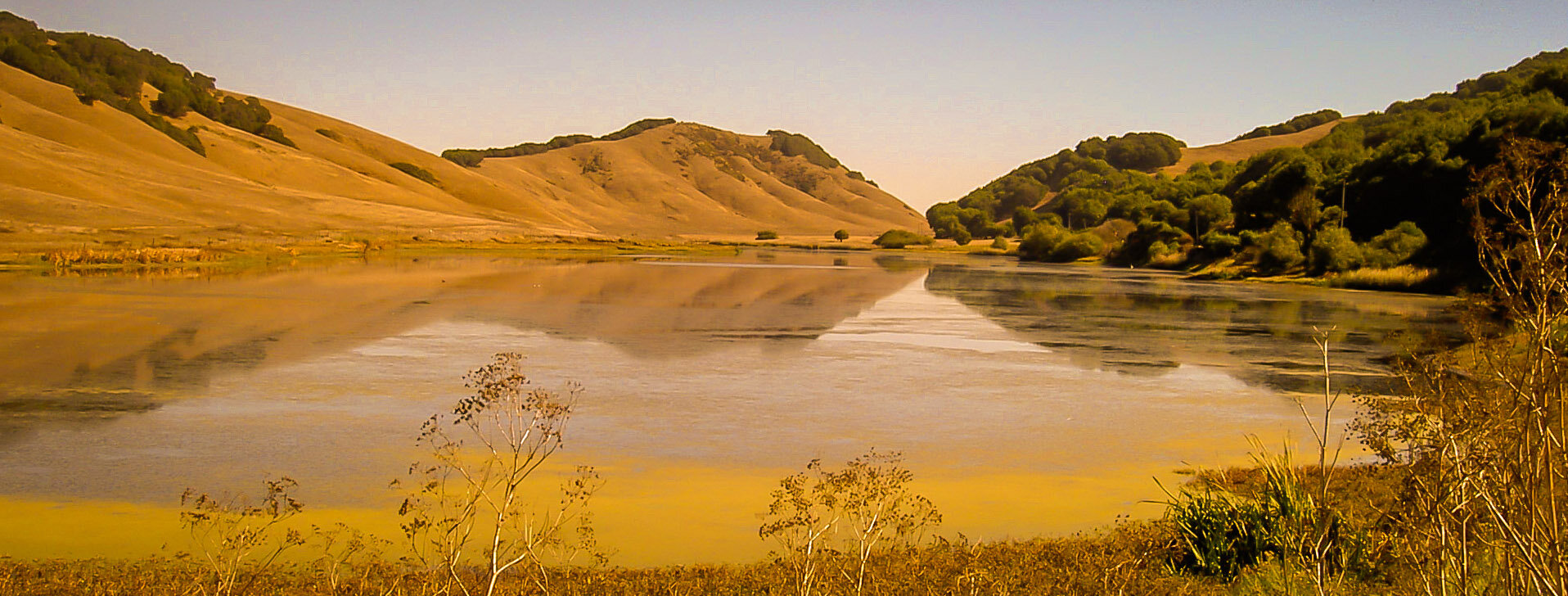
During winter evenings, newts in northern California’s Chileno Valley come down from the hills and must cross Chileno Valley Road to breed in Laguna Lake. Volunteers patrol the road nightly and pick up the newts (and other amphibians) and move them safely across the road.
Since the CVNB’s inception in 2019, volunteers have rescued nearly 40,000 newts, while more than 10,000 have been recorded as roadkill.
Our long-term goal is to create a science-based built solution to safely assist the newts in migrating to and from their breeding lake.
Meet Laguna Lake, the Chileno Valley Newt Brigade, and a few of the newts.

Notice this newt’s swollen tail, developed by males during their aquatic stage.
California Newt (Taricha torosa)
Newts are a type of salamander. They may live up to 30 years. They breed in the water bodies where they were hatched. They feed on mosquito larvae, worms, snails, slugs and sow bugs. Endemic to California, their presence defines many a childhood spent turning over rocks and logs.
This Rough-skinned newt (Taricha granulosa) was one of the other critters we found crossing Chileno Valley Road.
Volunteers use the iNaturalist app to collect and share data. During the winter of 2021 – 2022 we made 5,500 observations, covering 9 species, including California Newt (Taricha torosa), Sierran Tree Frog (Pseudacris sierra), California Slender Salamander (Batrachoseps attenuatus), Ensatina (Ensatina eschscholtzii), Arboreal Salamander (Aneides lugubris), California Red-legged Frog (Rana draytonii), Western Toad (Anaxyrus boreas), and Western Pond Turtle (Actinemys marmorata).

Rough-skinned Newt. Peter Pearsall/U.S. Fish and Wildlife Service
“Newts are an aquatic indicator species. The health of the population can indicate the health of other aquatic species and, more broadly, the health of a watershed.”
— Gail Seymour, retired Sr. Environmental Scientist, CA Dept. Fish and Wildlife
Sign up to receive our NewtNews newsletter
Another Rough-skinned Newt saved from likely vehicular slaughter on Chileno Valley Road
“Each time we rescue slippery, spotted beings we attest to their right to be, to live in the sovereign territory of their own lives. Carrying salamanders to safety also helps us to remember the covenant of reciprocity, the mutual responsibility that we have for each other.”